
How it works
How the system works
The sequence
Four steps, in order
Establish the water source
A deployable reservoir, Flexi-Hydrant reservoir or cover-tank liner is placed at the site and filled, or connected to the water supply that already exists there. The water source is the first decision in every system, because everything downstream depends on where the water sits.
Lay out the water delivery equipment
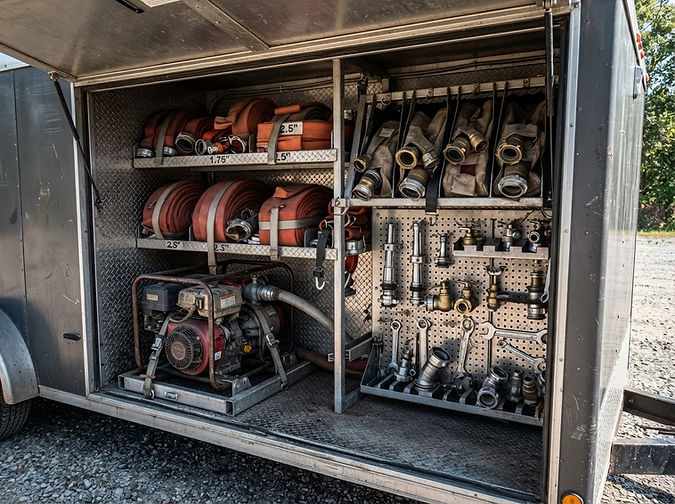
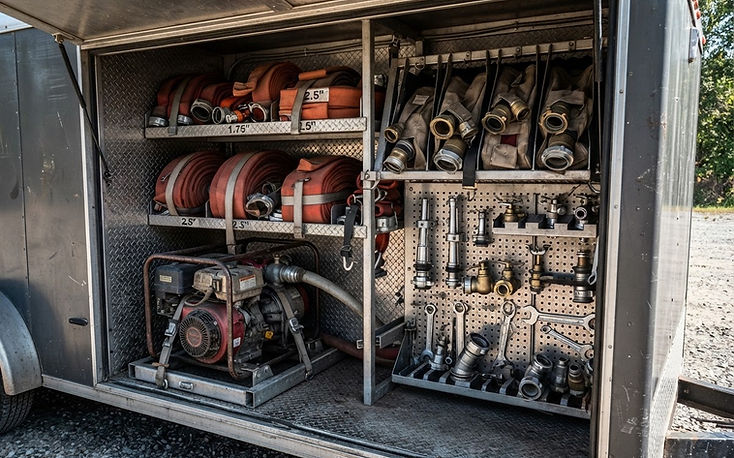
Hose and sprinkler kit carriers, rapid-deployment sprinkler heads, pumps and fittings are laid from the water source to the structure or fuel load being protected. Kit carriers keep these components packed and identifiable so a deployment does not begin with assembly.

Position the deployment platform
The custom emergency pod or off-road trailer holds the system where it is needed — at the property, the yard, the pad or the community — so response does not depend on an apparatus travelling to the scene.

Deploy and operate
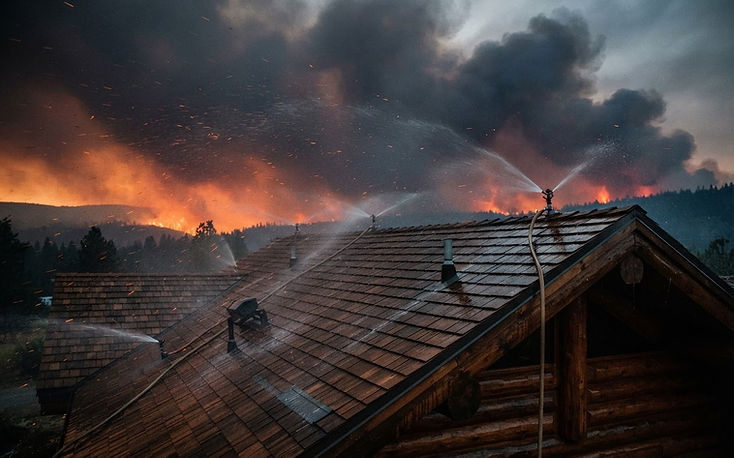
Sprinklers, masts, cannons and telescoping tower guns are activated to wet the structure and the surrounding fuel load. Elevated delivery is what extends protection beyond the immediate footprint of the unit.

Specifying a system
What determines the build
Four questions decide what a system is made of. Answering them is what turns a catalogue product into a build that works on a specific site.
- 01Where is the water, and how much of it is available at the site?
- 02What is being protected — a structure, a fuel load, equipment, or a whole community?
- 03How long before a responding apparatus could reach the site?
- 04Who operates the system, and how quickly can they deploy it?
Confirmed specification criteria needed
Training & operation documentation needed
Deployment
Deployment and support
Site assessment
Water source, access, terrain and the structure or asset being protected.
System build
Pod configuration, delivery equipment and platform selection confirmed against the site.
Placement
Positioning of the unit, hose runs and sprinkler layout.
Handover
Documentation and operating guidance for the team who will deploy the system.
Seasonal readiness
Pre-season checks and re-deployment between positions.
Service & support
Parts, replacement components and technical questions.
Support details needed
Ready to specify a system?
Send the site details and the team will work out the water source, delivery equipment and platform that fit.