
Emergency Resources
Understand the threat. Prepare before it arrives.
Knowledge center
Guides for property owners and site operators
Written to explain the mechanics of wildfire exposure and what preparation can realistically address — no claims, no speculation. Each guide links to the products and applications it relates to.
How Wildfires Spread
The basic progression of a wildfire — from ignition to structure loss — and the factors that shape fire behaviour around structures, properties and remote sites.
Read the guideEmber Attack Explained
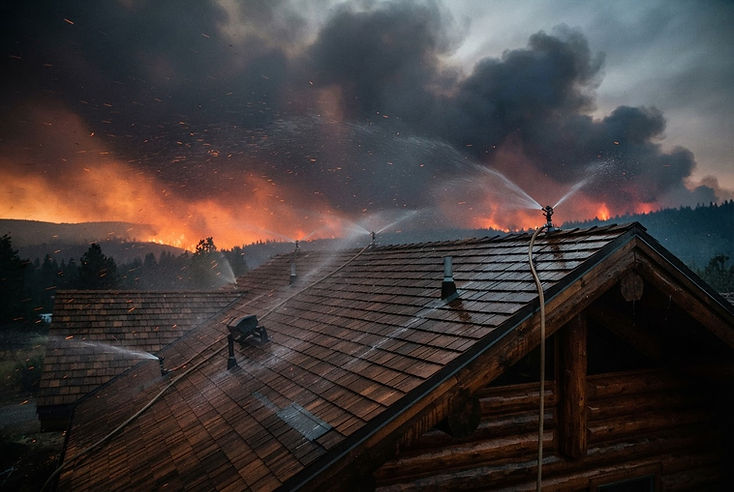
What embers are, how they travel ahead of a fire front, and why ember exposure is considered a leading ignition threat to structures during a wildfire.
Read the guideRadiant Heat
How the heat radiating from a wildfire can damage and ignite structures and surrounding property before any flame ever touches them.
Read the guideDirect Flame Contact
What happens when the fire front reaches a property, and why every meaningful preparation has to be complete before this stage begins.
Read the guideWhy Water Access Matters
Why a reliable water source and appropriate delivery equipment are central to wildfire preparedness — especially in rural and remote locations where hydrants do not exist.
Read the guideHow to Prepare a Rural Property
A practical guide to rural wildfire preparedness: water availability, access, defensible space, equipment, property layout, planning, communication and staged response equipment.
Read the guideBuilding a Private Fire Response System
How to think about a response system as five components — water source, water delivery, pumping, suppression equipment and mobile deployment — and how they map to Fire Truck In A Box product categories.
Read the guideWildfire Preparedness Checklist
A printable checklist covering property, water, access, equipment, communication and emergency planning — work through it before fire season, then keep it current.
Open the checklistResponse plan
How Fire Truck In A Box fits into a response plan
Water has to be located, moved and applied. A prepared system follows the same sequence every time.
Source
Establish or identify an available water source.
Connect
Connect the appropriate pumping and delivery equipment.
Deploy
Position the system where it is needed.
Deliver
Move water to the area requiring protection or suppression.
Respond
Maintain a staged response capability while emergency services are being contacted or deployed.
This sequence describes how staged equipment is positioned and used. No claims are made about response times, suppression performance or outcomes; results depend on site conditions. Verified specifications appear on each product page.
Where these systems are used
Wildfire & Ember Defence
Pre-positioned water delivery for wind-driven ember and wildfire exposure.
Explore applicationRemote & Rural Properties
Fire response capability where the nearest apparatus is a long way out.
Explore applicationMunicipal & Structural Response
A staged water source and delivery system for structural response.
Explore applicationIndustrial & Commercial Sites
On-site water source and delivery for high-risk industrial and commercial property.
Explore applicationAgriculture & Ranching
Mobile water delivery for farmyards, equipment and stored feed.
Explore applicationMining & Construction
Mobile suppression capability for working sites with no fixed water supply.
Explore applicationRegional guides
Regional wildfire guides in development
Build your response system
Tell us about your property, site or organization and the team will help identify the water source, delivery and pumping components that fit.