What embers are
Embers are small pieces of burning or glowing material — bark, twigs, cone scales, manufactured debris — lifted into the air by the heat and wind of a fire. Individually they are small, but they carry enough heat to ignite dry, fine material where they land.
Because they are light, wind moves them efficiently. A fire does not have to be close for its embers to reach a property.
How embers travel ahead of the fire front
Wind carries embers well ahead of the main fire front, sometimes over considerable distances. This is called spotting, and it means the first sign of a wildfire at a property is often not flames on the horizon — it is embers landing quietly in gutters, on decks and in vegetation.
Embers tend to accumulate anywhere airflow slows: roof valleys, gutters, vents, under decks, between boards, against walls and in corners. A small pile of embers in the wrong place can smoulder for a long time before it becomes visible flame.
Why ember exposure matters
Wildfire researchers consistently identify embers as a leading cause of structure loss during wildfires — in many events, more structures are ignited by embers than by the flame front itself. A property can be surrounded by intact, defensible space and still be ignited by a single ember finding dry debris in a gutter or vegetation touching a wall.
This is why ember awareness shifts attention from the horizon to the building itself: the roof, the gutters, the vents, the deck, and the first few metres around every structure.
Reducing ember exposure on a property
Ember defence is mostly about removing the dry, fine material embers need, and keeping water available to deal with ignition points quickly while they are still small.
- Keep roofs, gutters and decks clear of leaves, needles and debris, particularly during fire season.
- Screen or close vents and other openings where embers can enter a structure.
- Break up continuous fuel paths near structures, and separate vegetation from walls and eaves.
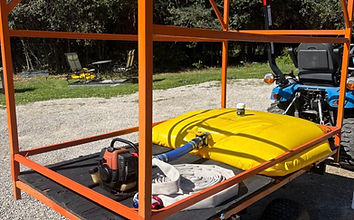
- Keep a water supply and delivery equipment staged so spotted ignitions can be wetted down while they are small.