Think in components, not products
A private fire response system is not one product. It is five components that have to work together, and a gap in any one of them limits the whole chain:
WATER SOURCE + WATER DELIVERY + PUMPING + SUPPRESSION EQUIPMENT + MOBILE DEPLOYMENT
Water that cannot be pumped is a pond. A pump with no source is an engine with nothing to draw. A complete kit with no way to move it arrives late. Evaluating any piece of equipment is really a question about where it fits in this chain.
Water source
Everything starts with water held where it will be needed.
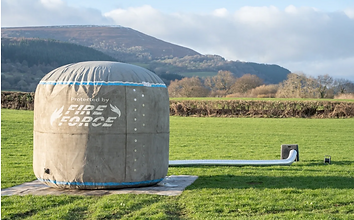
This is the role of the Water Source Products family: portable collapsible reservoirs that are empty and light until deployed, then hold water at the point of use — whether that is beside the structures being protected, at a worksite, or at a refill point along a longer water shuttle.
Water delivery
Water in a reservoir has to reach the exposure. Delivery equipment — hose in workable lengths, manifolds that split flow, and elevated delivery such as mast or tower-mounted nozzles — determines how far and how flexibly water can be applied.
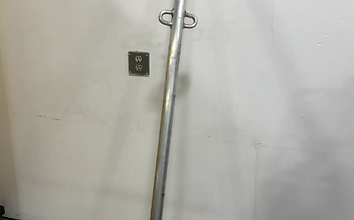
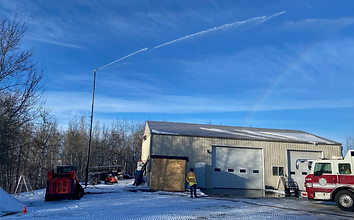
This is the Water Delivery Systems family: hose and sprinkler kit carriers, mast and cannon assemblies, and elevated tower guns for throwing water over longer distances or onto roofs and elevated exposures.
Pumping
Pumps convert a static water source into working pressure. Pump selection determines flow and pressure — and therefore how many delivery lines can run at once and how far water can be pushed. Pump kits are specified and supplied as part of Fire Truck In A Box system packages; current pump specifications are listed on each product page.
Suppression equipment
Nozzles, handlines and sprinkler heads turn flow into coverage: wetting roofs and surfaces against embers, covering vegetation, and applying water where ignition starts. Suppression equipment is what the delivery system feeds, and it is sized to the pump and hose behind it.
Mobile deployment
The final component is movement. A response has to reach where it is needed — across a large property, to a remote site, or to a second location entirely.
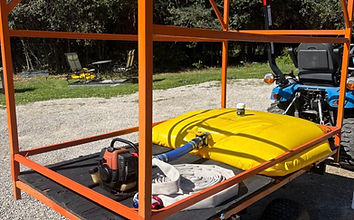
This is the role of the Pods family: purpose-built off-road trailers that carry the complete system — reservoirs, pump kit, hose, nozzles and sprinklers — to where it is deployed, so the other four components arrive together and ready.
How the components come together
Assembled, the five components form a staged capability: water held at the point of use, pumped through delivery lines, applied through nozzles and sprinklers, and deployable wherever the risk is. That is also how Fire Truck In A Box systems are configured — the product pages for each family show the components available for each role, and the team can recommend combinations for a specific property or site.