Water is the limiting factor
In wildfire response, water is usually the constraint everything else works around. Suppression effort — whether by a fire department or by a prepared property owner — depends on water being available where it is needed, in enough volume, with enough pressure to move it through hose.
In towns and cities that problem is solved underground: hydrants on every block, pressurized mains and tanker shuttles. Outside those areas, water access becomes a planning question the property owner has to answer.
The rural and remote challenge
Rural and remote locations face the same three gaps, in different proportions:
- No hydrants: the nearest pressurized source may be kilometres away.
- Distance and access: long driveways, rough terrain, narrow gates and single-lane roads slow every load of water.
- Volume and pressure: creeks, wells and tanks vary by season, and many cannot feed a fire hose directly.
On-site water sources
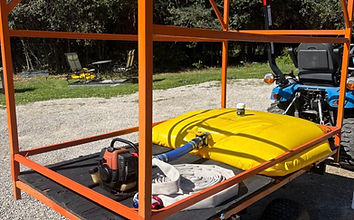
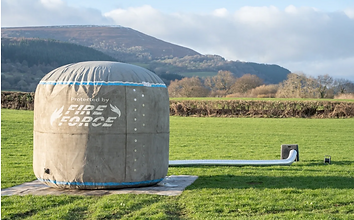
The practical answer is to hold water where it will be needed, before it is needed. Open water sources — ponds, tanks, and portable collapsible reservoirs — give pumps something to draw from at the point of use, rather than relying on water being shuttled in from a distance.
Portable collapsible reservoirs are especially useful in this role: they are empty and light until needed, can be positioned wherever the response requires them, and can be refilled from trucks, tanks or natural sources as supply allows.
Moving water: pumping, hose and delivery
Water that cannot be moved is not a response capability. A pump converts a static source into working pressure; hose moves that water to where it is needed; nozzles and sprinklers turn flow into coverage over roofs, vegetation and exposure zones.
When evaluating equipment, the useful question is not only how much water exists on a property, but how quickly it can be moved from where it is stored to where it would actually be used — and what happens if the first source runs low.